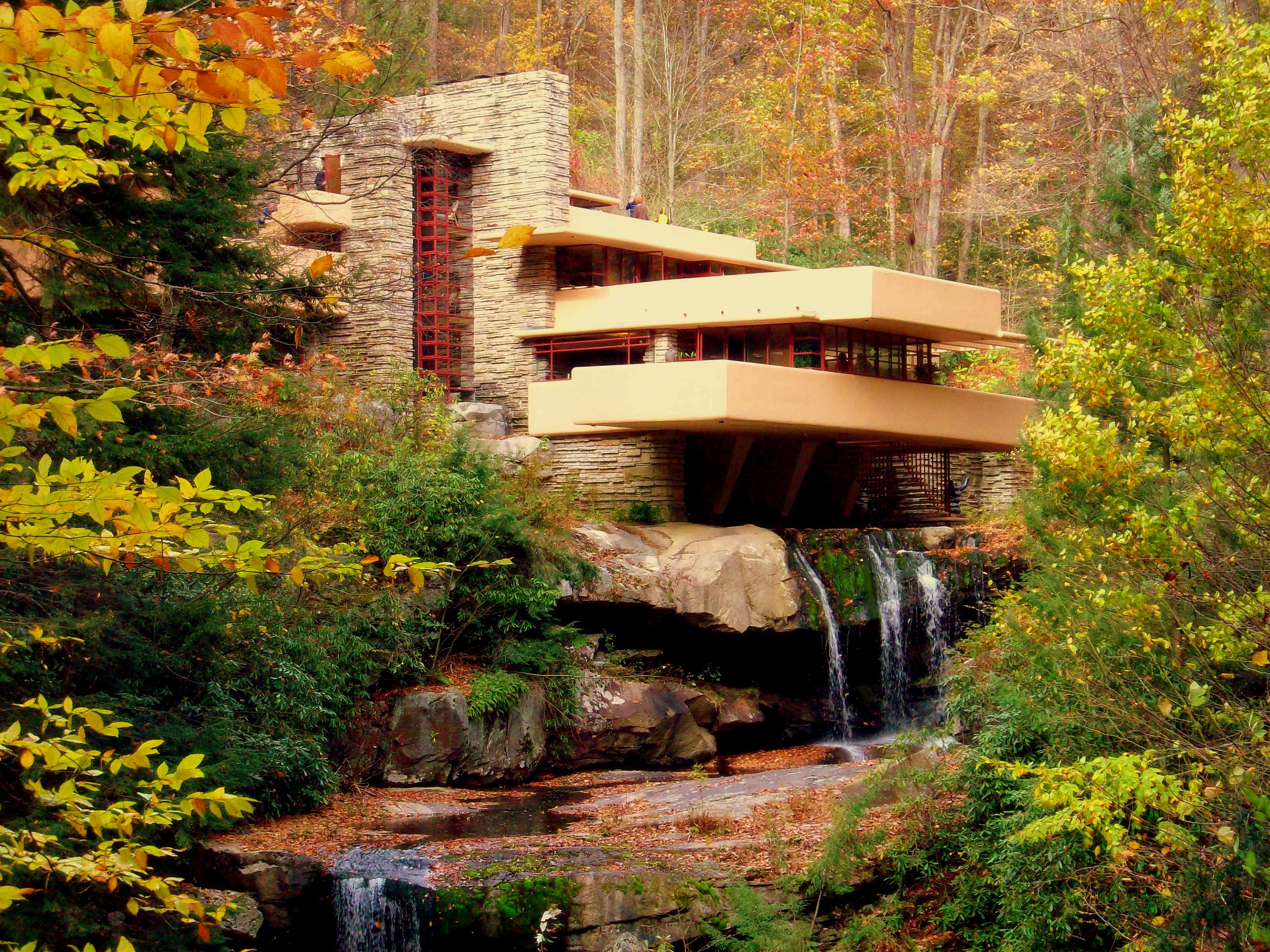
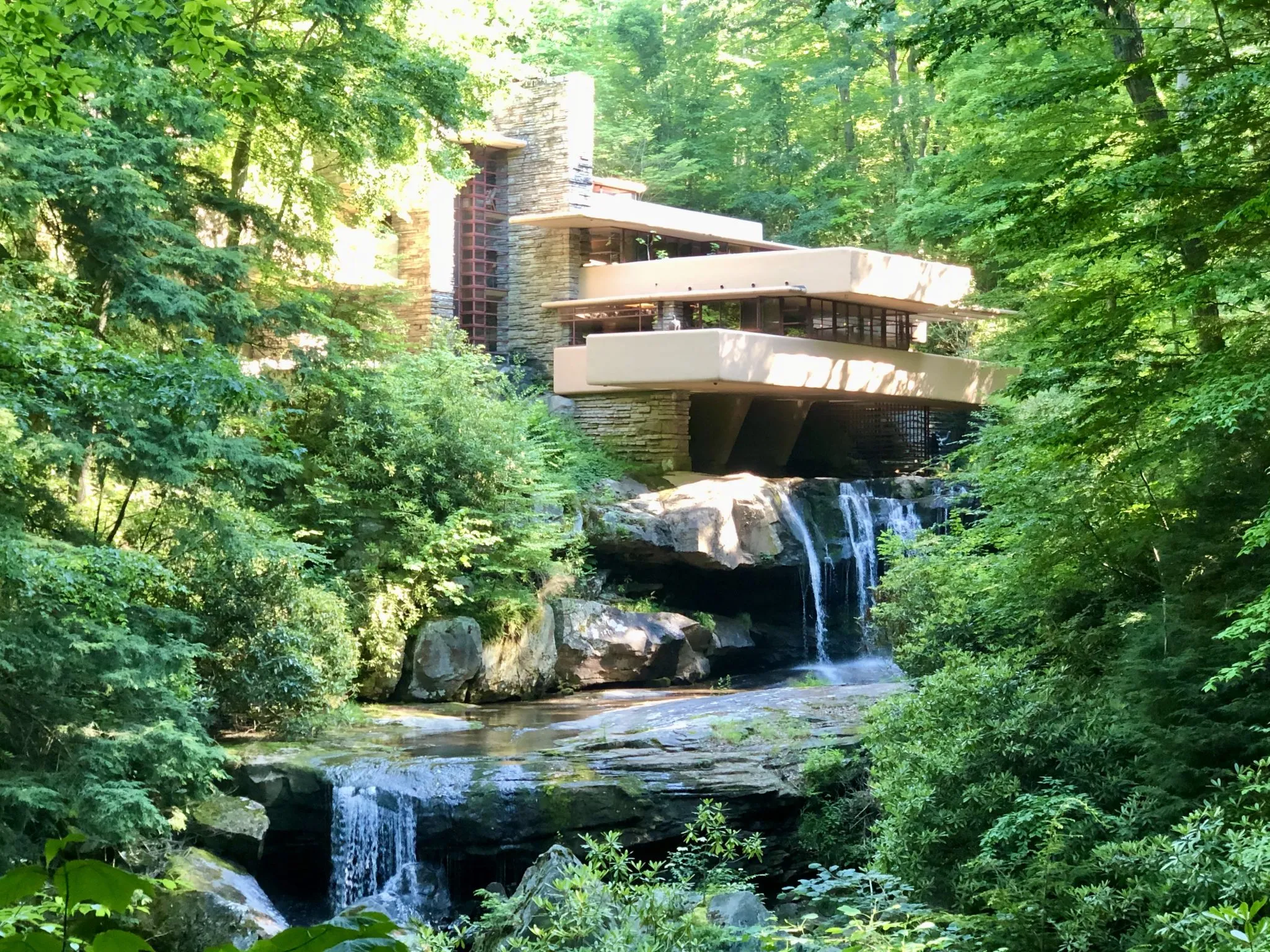
Fallingwater, also known as the Kaufmann Residence, is a masterpiece of modern architecture designed by Frank Lloyd Wright in 1935. Located in Mill Run, Pennsylvania, this iconic house is renowned for its harmonious integration with the natural landscape, as it is built directly over a waterfall on Bear Run.
Design and Architecture
Wright's design philosophy, known as "organic architecture," emphasizes the symbiotic relationship between human habitation and the natural environment. Fallingwater exemplifies this approach through its cantilevered terraces that extend over the waterfall, creating a dynamic interplay between the built environment and nature. The structure utilizes locally sourced sandstone and reinforced concrete, allowing it to blend seamlessly with the surrounding rock formations and forested landscape.
ARCHDAILY
Interior Features
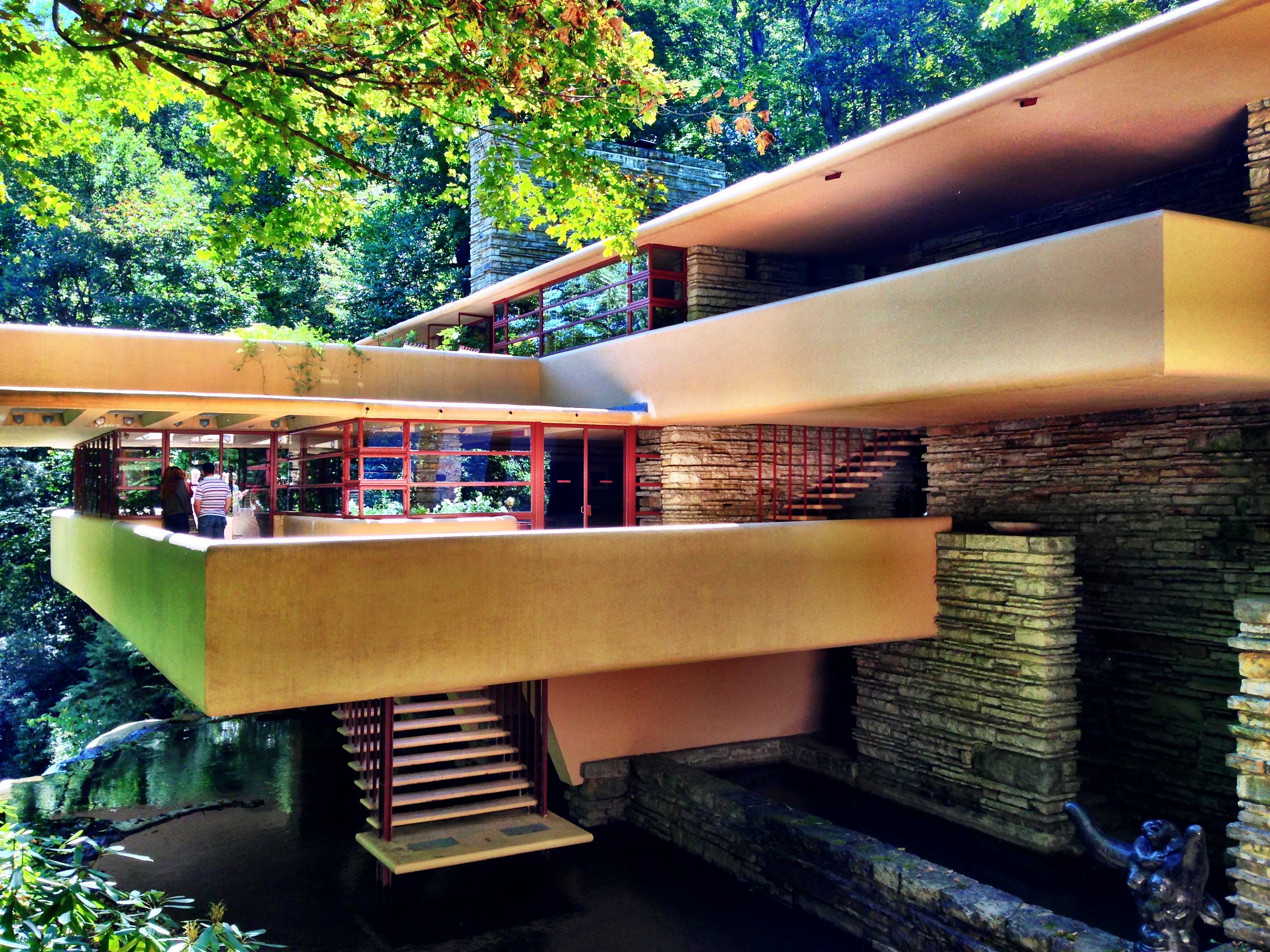
The interior of Fallingwater is designed to enhance the connection with its natural surroundings. Large expanses of glass provide panoramic views of the forest and the stream below, while the open floor plan fosters a sense of continuity between indoor and outdoor spaces. Notably, a hatch door in the living room opens to a suspended stairway that descends directly to the stream, allowing occupants to experience the sights and sounds of the waterfall intimately.
ARCHDAILY
Historical Significance
Commissioned by Edgar J. Kaufmann, a prominent Pittsburgh department store owner, Fallingwater served as a weekend retreat for the Kaufmann family. Completed in 1937, the house quickly gained international acclaim and was featured on the cover of Time magazine, solidifying Wright's reputation as a visionary architect. In 1964, the house was opened to the public as a museum, and in 2019, it was designated a UNESCO World Heritage site as part of "The 20th-Century Architecture of Frank Lloyd Wright."
Visiting Fallingwater
Today, Fallingwater is open to the public for tours, offering visitors the opportunity to explore its innovative design and learn about its history. The site provides various programs and events, including guided interior tours and grounds walks, allowing guests to experience Wright's architectural genius firsthand.
Additional Resources
For more information and to plan a visit, please refer to the official Fallingwater website:
Fallingwater stands as a testament to Frank Lloyd Wright's belief in creating structures that exist in harmony with the natural world, continuing to inspire architects and enthusiasts alike.
Fallingwater, also known as the Kaufmann Residence, is a masterpiece of modern architecture designed by Frank Lloyd Wright in 1935. Located in Mill Run, Pennsylvania, this iconic house is renowned for its harmonious integration with the natural landscape, as it is built directly over a waterfall on Bear Run.
Design and Architecture
Wright's design philosophy, known as "organic architecture," emphasizes the symbiotic relationship between human habitation and the natural environment. Fallingwater exemplifies this approach through its cantilevered terraces that extend over the waterfall, creating a dynamic interplay between the built environment and nature. The structure utilizes locally sourced sandstone and reinforced concrete, allowing it to blend seamlessly with the surrounding rock formations and forested landscape.
ARCHDAILY
Interior Features
The interior of Fallingwater is designed to enhance the connection with its natural surroundings. Large expanses of glass provide panoramic views of the forest and the stream below, while the open floor plan fosters a sense of continuity between indoor and outdoor spaces. Notably, a hatch door in the living room opens to a suspended stairway that descends directly to the stream, allowing occupants to experience the sights and sounds of the waterfall intimately.
ARCHDAILY
Historical Significance
Commissioned by Edgar J. Kaufmann, a prominent Pittsburgh department store owner, Fallingwater served as a weekend retreat for the Kaufmann family. Completed in 1937, the house quickly gained international acclaim and was featured on the cover of Time magazine, solidifying Wright's reputation as a visionary architect. In 1964, the house was opened to the public as a museum, and in 2019, it was designated a UNESCO World Heritage site as part of "The 20th-Century Architecture of Frank Lloyd Wright."
Visiting Fallingwater
Today, Fallingwater is open to the public for tours, offering visitors the opportunity to explore its innovative design and learn about its history. The site provides various programs and events, including guided interior tours and grounds walks, allowing guests to experience Wright's architectural genius firsthand.
Additional Resources
For more information and to plan a visit, please refer to the official Fallingwater website:
Fallingwater stands as a testament to Frank Lloyd Wright's belief in creating structures that exist in harmony with the natural world, continuing to inspire architects and enthusiasts alike.
Fallingwater, also known as the Kaufmann Residence, is a masterpiece of modern architecture designed by Frank Lloyd Wright in 1935. Located in Mill Run, Pennsylvania, this iconic house is renowned for its harmonious integration with the natural landscape, as it is built directly over a waterfall on Bear Run.
Design and Architecture
Wright's design philosophy, known as "organic architecture," emphasizes the symbiotic relationship between human habitation and the natural environment. Fallingwater exemplifies this approach through its cantilevered terraces that extend over the waterfall, creating a dynamic interplay between the built environment and nature. The structure utilizes locally sourced sandstone and reinforced concrete, allowing it to blend seamlessly with the surrounding rock formations and forested landscape.
ARCHDAILY
Interior Features
The interior of Fallingwater is designed to enhance the connection with its natural surroundings. Large expanses of glass provide panoramic views of the forest and the stream below, while the open floor plan fosters a sense of continuity between indoor and outdoor spaces. Notably, a hatch door in the living room opens to a suspended stairway that descends directly to the stream, allowing occupants to experience the sights and sounds of the waterfall intimately.
ARCHDAILY
Historical Significance
Commissioned by Edgar J. Kaufmann, a prominent Pittsburgh department store owner, Fallingwater served as a weekend retreat for the Kaufmann family. Completed in 1937, the house quickly gained international acclaim and was featured on the cover of Time magazine, solidifying Wright's reputation as a visionary architect. In 1964, the house was opened to the public as a museum, and in 2019, it was designated a UNESCO World Heritage site as part of "The 20th-Century Architecture of Frank Lloyd Wright."
Visiting Fallingwater
Today, Fallingwater is open to the public for tours, offering visitors the opportunity to explore its innovative design and learn about its history. The site provides various programs and events, including guided interior tours and grounds walks, allowing guests to experience Wright's architectural genius firsthand.
Additional Resources
For more information and to plan a visit, please refer to the official Fallingwater website:
Fallingwater stands as a testament to Frank Lloyd Wright's belief in creating structures that exist in harmony with the natural world, continuing to inspire architects and enthusiasts alike.




Click the pagination button above to continue reading.


Post a Comment Cancel Reply